In het tijdperk van computersystemen met hoge dichtheid worden traditionele luchtkoelsystemen in hoog tempo vervangen door geavanceerde vloeistofkoelingsarchitecturen. De kern van deze transformatie wordt gevormd door de koeldistributie-unit (CDU) in het datacenter – een cruciaal systeemonderdeel dat verantwoordelijk is voor de nauwkeurige toevoer en regulering van koelvloeistof door de gehele serverinfrastructuur.
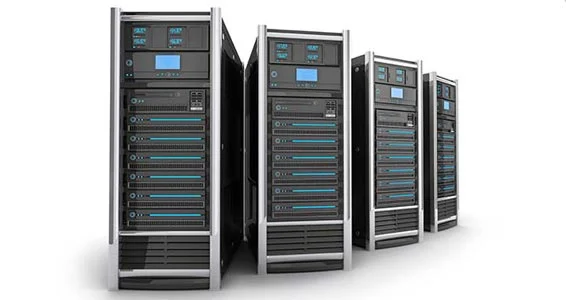
Definitie: Wat is een koelverdeelunit (CDU) voor een datacenter?
Een koeldistributie-unit (CDU) is het centrale distributieapparaat in vloeistofgekoelde datacenters. Deze levert koelvloeistof – water of gefluoreerde vloeistoffen – aan koelplaten, dompelkoeltanks of waterblokken die rechtstreeks op de chip zijn aangesloten. De CDU zorgt voor gerichte warmteafvoer op chip- of rackniveau, waardoor de thermische efficiëntie en betrouwbaarheid in moderne datacenters worden verbeterd.
belangrijke functies van cdu-systemen
Koelvloeistofverdeling: regelt de doorstroming met behulp van pompen en kleppen om een evenwichtige koeling voor elke server te garanderen.
Temperatuur- en drukregeling: handhaaft de koelvloeistoftemperatuur binnen een nauwe tolerantie (±0,5 °C) en zorgt voor een stabiele druk om cavitatie of lekkage te voorkomen.
Redundantieontwerp: maakt gebruik van configuraties met dubbele pomp en dubbele voeding om een beschikbaarheid van 99,999% te garanderen.
Realtime monitoring: integreert met DCIM-systemen om realtime feedback te geven over debieten, temperaturen en lekstatus.
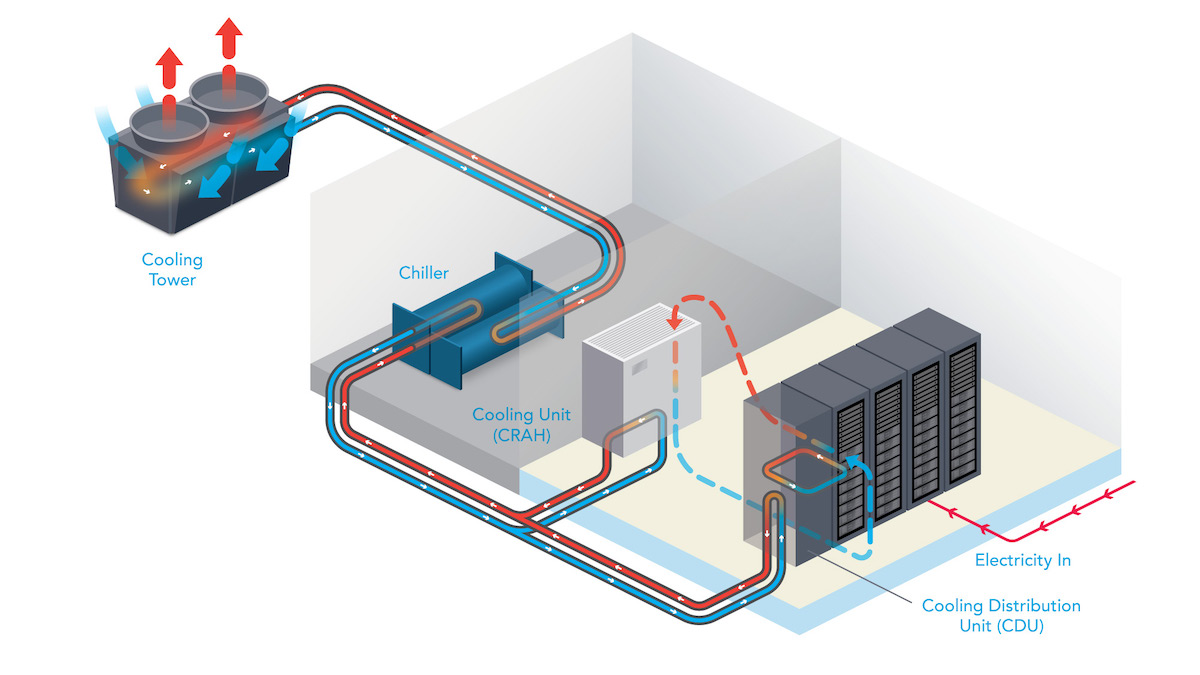
soorten koeldistributie-eenheden voor datacenters
Rack-level CDU: ontworpen voor gebruik in één kast, met een koelcapaciteit van 30-100 kW. Ideaal voor schaalbare en flexibele implementaties.
CDU op rijniveau: biedt stroomvoorziening voor een complete rij serverracks tot 500 kW, ideaal voor computerclusters met een hoge dichtheid.
Immersion CDU: speciaal ontworpen voor eenfasige of tweefasige immersiekoelsystemen, compatibel met gefluoreerde vloeistoffen zoals 3M Novec.
voordelen van CDU vloeistofkoelsystemen
behaalt een energie-efficiëntie (PUE) van slechts 1,05, wat een energiebesparing van meer dan 30% oplevert ten opzichte van luchtkoeling.
Ondersteunt workloads met een zeer hoge dichtheid (bijv. 50 kW+ per rack voor AI- of GPU-servers).
werkt geruisloos met ventilatorloze cdu-ontwerpen (<50db noise level).
application scenarios
supercomputing facilities (e.g., japan's fugaku)
ai training clusters (e.g., nvidia dgx a100)
edge data centers with compact cdu footprints
cold plates, heat sinks, and water blocks: the execution layer of cdu cooling
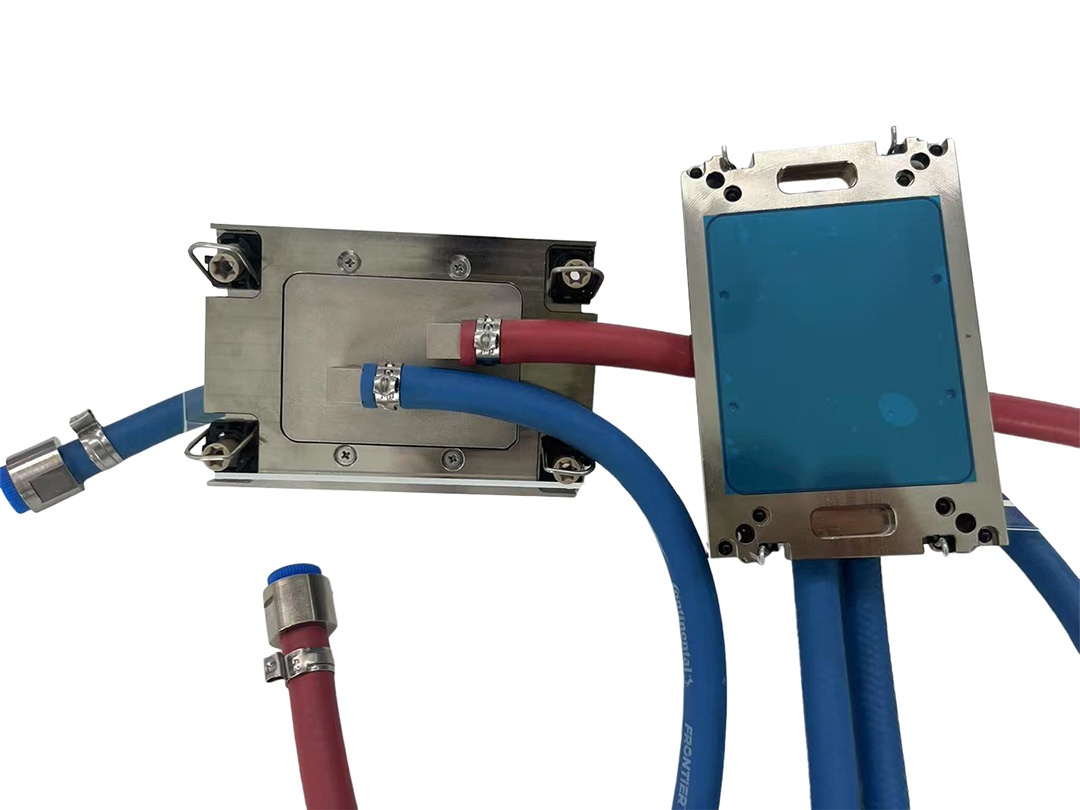
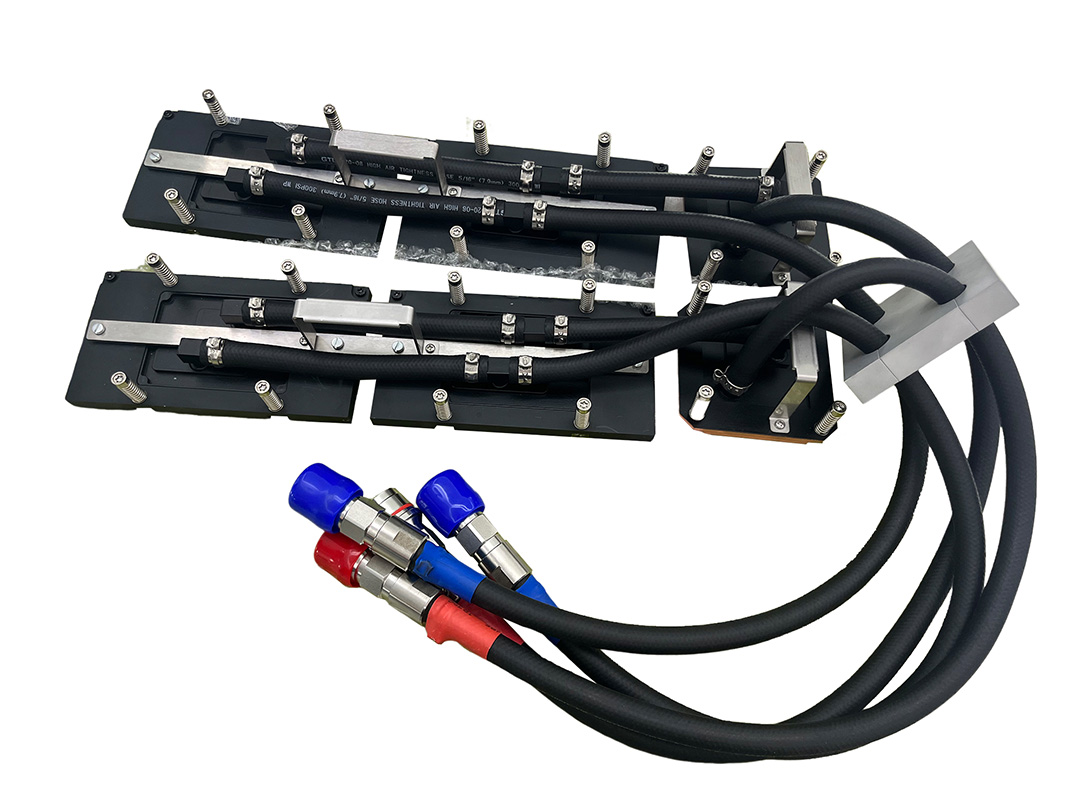
while the cdu serves as the command center for liquid flow, its true cooling potential is realized through its terminal components: cdu water-cooled cold plates, heat sinks, and water blocks. these components directly interface with heat-generating devices to execute efficient thermal transfer.
| component | cdu system role | application |
|---|
| cold plate | transfers coolant to chips via microchannels for precise heat removal | gpu/cpu-intensive racks, ai compute nodes |
| heat sink | provides secondary cooling to cdu's internal electronics | cdu control cabinet (pumps, psu modules) |
| water block | customized cooling of irregular thermal sources; connects with cdu pipes | hpc systems, supercomputing accelerators |
technical advantages vs. traditional air cooling
1. cold plates (cdu water plates)
extreme heat flux capacity: supports up to 500–1000w/cm², outperforming air cooling (50–100w/cm²).
surface uniformity: delivers thermal spread with <2°c delta across the plate, preventing local overheating.
smart cdu integration: built-in sensors feed real-time data to cdu controllers, enabling dynamic flow and temperature regulation.
2. heat sinks for cdu internal components
cdu self-cooling: ensures cdu reliability by passively cooling key electronics.
lightweight design: aluminum 6063 construction minimizes weight, ideal for rack-mount cdu units.
3. custom water blocks (cdu water block solutions)
complex shape compatibility: cnc or 3d-printed to match non-standard chip designs (e.g., nvidia h100).
low flow resistance: engineered water channels reduce cdu pump workload (pressure drop < 0.3 bar).
cdu-component synergy: smart thermal management
modern cdu liquid cooling systems are not standalone—they function in harmony with cold plates, heat sinks, and water blocks to form a dynamic, closed-loop thermal architecture. key highlights include:
dynamic flow tuning: cdu adjusts coolant delivery based on feedback from water plates or water blocks (e.g., via intel dcm protocol).
leak protection: quick-disconnect fittings (e.g., cpc, qd) on water blocks and cdu hoses ensure sealed, safe connections.
energy efficiency: combined cdu + cold plate architecture can achieve pue as low as 1.05, compared to 1.5+ for traditional systems.
real-world applications
google data center: utilizes cdus to distribute chilled water to rack-mounted water plates for tpu cooling.
tesla dojo supercomputer: employs cdu-integrated custom water blocks to manage 1mw per cabinet.
crypto mining farms: use aluminum cold plates + cdu instead of fans, reducing power consumption by 30%.
future trends in cdu-based cooling solutions
two-phase cdu cooling: uses phase-change fluids like liquid nitrogen to achieve 5x efficiency gains.
ai-driven cdu control: enables predictive adjustments in flow and temperature based on workload forecasting.
as the backbone of next-generation data center infrastructure, the data center cooling distribution unit (cdu)—along with advanced cdu water plates, heat sinks, and liquid cooling water blocks—will continue to evolve toward smarter, quieter, and more efficient thermal management solutions.
keyword summary: data center cooling distribution unit (cdu), cdu water plate, cdu water block, immersion cdu, rack-level cdu, cold plate, heat sink, liquid cooling system, full-chain liquid cooling, water-cooled server, ai liquid cooling.